
What is a limited company?
To know how to register a limited company it’s good to know exactly what a limited company is. A limited firm is one in which the owners (typically shareholders) and management have separate legal identities (formally called directors). In the United Kingdom, it must be registered with Companies House. This distinguishes it as a different ‘legal person’ from its owners, complete with its own company registration number.
Following that, it is governed by the requirements of the Companies Act (and its own articles of association). Information returns must be filed with Companies House. This information on limited liability companies may be found in the public registry, which is accessible to the general public.
Even though a limited business just has one shareholder and director, it is still a legal entity independent from that person.
A limited firm can enter into contracts in its own name, including hiring staff, because it is legally different from its owners. It is responsible for its own actions and has the legal capacity to sue and be sued. A limited corporation has legal ownership of the money it makes through sales and may keep the profits it makes. It is also responsible for paying its own invoices and debts.
The fundamental reason for a limited company’s popularity among small businesses is its “restricted liability.” The firm’s owners are protected by limited liability, which implies that the amount they stand to lose if the company fails is strictly limited unless there is fraud or other severe misbehaviour. If the firm fails to fulfil its debts or obligations, the owners often lose only the nominal value of their shares, the amount of any guarantee (for members of limited liability corporations), any money they’ve previously invested in the limited company, and the amount of any personal guarantee they’ve offered to the company.
A private limited company is commonly referred to when someone says “limited company.” In the United Kingdom, the majority of limited companies are formed as private corporations limited by shares.
The ownership of the corporation is divided into shares, which are distributed to shareholders. Each shareholder can buy one or more shares in the company. Their liability is usually restricted to the amount paid (or due to be paid) for the shares.
In many private limited companies, a single share is issued to a single shareholder. As a result, that shareholder owns and controls 100% of the corporation. If 100 shares were issued, but they were all issued to the same shareholder, the same thing would happen.
Other companies have more shareholders. Each shareholder’s ownership, voting rights, and entitlement to any earnings distributed as dividends are essentially defined by the number of shares they own.
The number of shares (and hence shareholders) that a limited company can have is unlimited.
The general public does not have access to shares in private limited companies. Additional limits on who can become a shareholder may be included in the company’s articles of incorporation.
The shareholders of a limited corporation appoint directors to administer the company on a daily basis. Smaller companies’ shareholders are more likely to designate themselves as directors. When a corporation has a high number of shareholders, it is improbable that all of them will serve as directors. Non-shareholder directors may be chosen if they are thought to be the greatest candidates for pushing the firm forward and producing value for shareholders.
Because it combines the option for profit sharing with a clear limit on personal financial liability, this type of corporate structure is particularly popular among both large and small commercial enterprises. If the company gets into financial difficulties, shareholders’ personal assets are not at risk since they are solely responsible for the amount they agreed to pay for the shares they own.
Can you set up a limited company by yourself?
A limited company can be formed by a single person who will be the sole shareholder and company director, or by a group of people. You need to register with companies house and complete some paperwork.
Why do all of this yourself when you can pay 360 Company Formations to do it for you? It’s not even expensive; with prices from £9.99 – £169.99, see why millions of people choose us to open their limited company. Please email [email protected] or call 0208 935 5240 with any questions. You may also reach out to us via live chat or a message on our website.
What documents do I need when registering a limited company?
You’ll acquire a ‘certificate of incorporation‘ if you register a business using companies house. This verifies the company’s legal existence and displays the company’s number and establishment date.
At least three pieces of personal information about yourself and your shareholders or guarantors are required, such as:
– Town of birth
– Mother’s maiden name
– Father’s first name
– Telephone number
– National insurance number
– Passport number
In most cases, your business is registered within 24 hours.
How much does it cost to start a company UK?
You may start a limited liability company for as low as £9.99 with 360 Company Formations. There are several advantages to hiring a business to form your limited company in the United Kingdom. For example, because our location may be used as your registered office, you can keep your home address off the public record. We will scan and transmit any letter we receive for your firm to you for your records. Using our services, you can rest certain that you are meeting all legal standards, and our service will make filing your confirmation statements a breeze. One of our knowledgeable employees will be able to register your business for VAT online, and you will not be required to sign anything.
Within three working hours after receiving your purchase, we will examine all applications and send them to Companies House.
We have no control over how long it takes Companies House to complete your limited company application after it is filed, although we strive to submit all company requests within three working hours. Company applications are normally processed within one working day at Companies House. Due to the weekend backlog, Mondays may take longer.
We also provide a variety of additional business-related services to assist you in getting the most out of your company.
Other bundles are also available, depending on the services you prefer:
Digital – At just £9.99, this is our most affordable choice, and it’s ideal for getting you started and reserving your company name.
– Company formation is included.
– Free business banking with digital documents sent by email
– Free .co.uk domain name.
Digital & Print – This package is similar to the digital package, but it also includes papers that will be mailed to your address. The digital package includes everything in the digital package plus an experienced pre-submission assessment and a GDPR compliance bundle for just £19.99.
Print Plus+ – This package offers the possibility to utilise our address as your registered office for a minimum of 12 months, maintaining your privacy. For just £54.99, it includes everything included in the digital and print bundles.
All Inclusive – For £169.99, you get everything included in the Print Plus+ plan plus a minimum of 12 months of business mail.
Contact 360 Company Formations today to learn more about how we can assist you with forming your business. Please contact us at [email protected] or phone 0208 935 5240. You may also contact us via live chat or by sending us a note through our website.
Is it worth setting up a company?
There are few downsides to starting a business, and there are several benefits. The following are the main advantages of forming a limited company:
Limited liability protection – because a corporation is a separate legal body, it is possible to isolate corporate obligations from personal assets.
Raising cash – In general, firms find it simpler to expand since it is easier to raise capital/borrow money. A company’s debt repayment is simpler since its after-tax income is larger, at 87.5 per cent after paying 12.5 per cent corporation tax. This is merely 45 per cent for a lone trader who has already paid up to 55 percent in income tax.
Building a pension fund – corporations have a lot more flexibility in terms of pension planning than lone merchants do these days.
Business continuity – because a corporation is a different entity from you, it may outlast you. This is critical for many firms in order to ensure their long-term viability.
Transferring the business – when demands change, it may be necessary to bring in new investors or change the ownership structure. A company’s shares enable numerous types of structures and shares.
Customer expectations – many of your clients are accustomed to receiving services from businesses; this might lend credibility to your product.
Incorporation – The benefit of incorporation is that the owner does not have to take all of the profits as a salary. Only the wage is subject to income tax, while the remainder of the earnings can be kept to reinvest in the firm or pay down debt, and is only subject to the corporation tax rate of 12.5 percent, which is significantly lower than the income tax rates of up to 55 percent.
There are certain disadvantages to owning a business, but they should not be a deterrent. Among them are:
Annual compliance – establishing a business entails some procedures, such as filing annual accounts with the Companies Office.
Company directors will have obligations and responsibilities to fulfil. For complying firms, none of these should be a problem.
Problems with cash extraction – A lone trader makes direct earnings and owns the company’s assets. A company structure adds another layer between the owner and the company.
Overall, a firm should convert to a company format early in its life cycle, preferably before taking on bank debt. Existing debt and assets can be transferred to a corporation, and firms do so to make repayments more manageable.
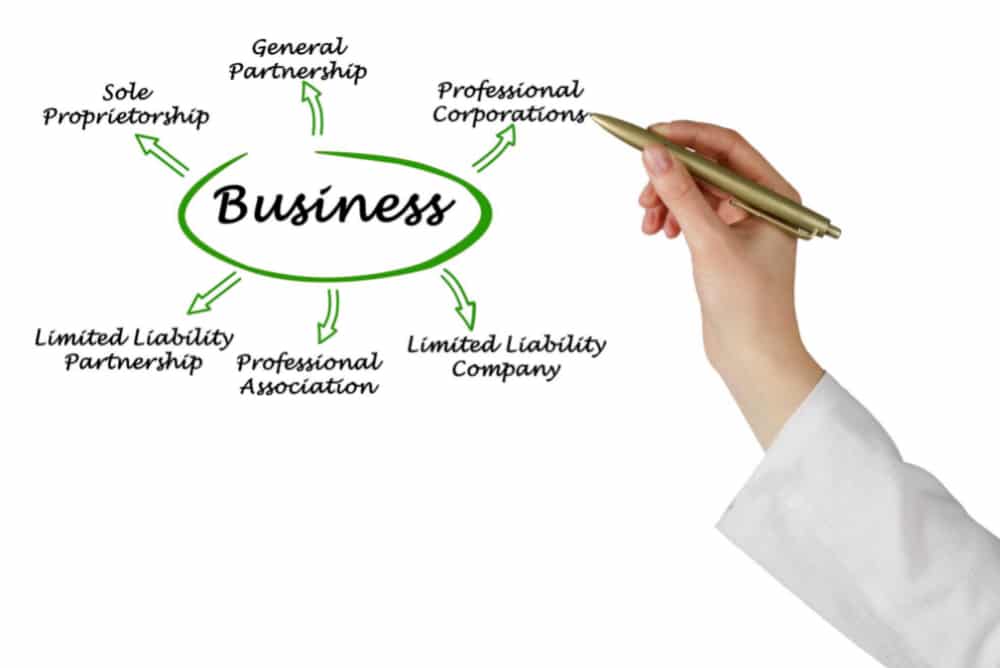
What are the different types of company I can register for?
– Limited by Shares – A corporation that is “limited by shares” means that its investors own it and have special rights over it. For example, directors may compel shareholders to vote on and approve changes to the company.
LLPs (Limited Liability Partnerships) – In the United Kingdom, a “Limited Liability Partnership” limited corporation is controlled by The Limited Liability Act of 2000. This Act taxes individual members rather than the partnership, which is comparable to how partnerships are regulated in other countries. This is because the LLP is not a business, corporation, or other legal entity. A Limited Liability Partnership (LLP) in the United Kingdom is a cross between a typical partnership and a Limited Liability Company (LLC). It is usually created and managed via a written LLP agreement.
– Limited by Guarantee – A limited company that is “limited by guarantee” does not have shareholders or shares; instead, it has guarantors and a “guaranteed amount.” There must be at least one guarantor as well as a ‘guaranteed sum.’ Guarantors are members of the business who have power and make important decisions. They usually do not get a profit from the corporation; instead, the funds are kept inside the company or used for other purposes.
Guarantors promise to pay the company a specified amount if it fails to pay its debts. This is the ‘certain quantity.’ They must pay the business the whole amount of their guarantee. This payment safeguards guarantors in the event that the company goes out of business. The guaranteed amount is decided by you rather than the company’s worth.
The majority of limited liability firms are ‘share-limited,’ and most enterprises have ‘ordinary’ shares. This means that directors are paid dividends and have one vote per share on business decisions.
A firm limited by shares must have at least one shareholder, who can also be a director. If you are the single shareholder, you will own 100% of the company. A firm can have an unlimited number of shareholders.
The price of a single share might vary significantly. If the company must close, stockholders will be required to pay the entire value of their stock. Choose a low share value (for example, £1) to keep the shareholders’ responsibilities to a reasonable level.
When forming a corporation, you must provide information regarding the shares (a ‘statement of capital’). The number of shares of each class in the company and their total value, also known as the ‘share capital,’ as well as the names and addresses of all shareholders, also known as ‘subscribers’ or ‘members,’ are all listed here.